Combining zinc PCA: what goes with it and where you can skip a step
INGREDIENT COMBINATION
Combining zinc PCA is straightforward: the active ingredient gets on with niacinamide, vitamin C, hyaluronic acid, panthenol, ceramides, squalane and bakuchiol. There is no known incompatibility, and you don’t need rest days or separate times of day. What matters is rarely the combination itself, but whether you need the second active ingredient at all.
Can you use zinc PCA and niacinamide together?
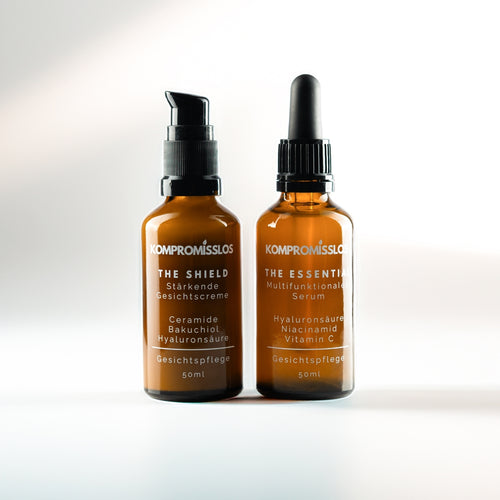
Yes, zinc PCA and niacinamide can be used together without restriction, whether in the same product or in two consecutive steps. Both are water-soluble, both work within the skin’s usual pH range, and neither of them exfoliates the outer layer of the skin. That means there is no mechanism by which they could interfere with each other. The question of benefit is more interesting than the question of compatibility, because both aim at the same visible result: a more even, less shiny complexion. If you buy a niacinamide serum and a zinc serum on top, you are paying twice for the same goal and putting one more formula on your skin than you need to. A formulation that already contains both makes more sense. The Duo of serum and cream contains niacinamide at 5 per cent and zinc PCA at 1 per cent, both figures referring to the Duo as a whole. If you already use a product in which niacinamide is doing its job, an extra zinc booster is usually superfluous.
Do vitamin C and zinc PCA belong in the same routine?
Yes, vitamin C and zinc PCA belong in the same routine, and there is no known incompatibility that would justify separating them by time of day. The widespread concern is based on a mix-up: vitamin C is sensitive to light, oxygen and the pH of its surroundings, and that sensitivity is a question of formulation and packaging, not of the order in which you apply things. Whether a vitamin C product stays stable is decided in the laboratory and in the jar, long before it reaches your face. The form of vitamin C used is therefore more important than the question of zinc. Pure ascorbic acid needs a low pH and oxidises easily; more stable derivatives such as 3-O-ethyl ascorbic acid are more robust in this respect. The Duo contains vitamin C as 3-O-ethyl ascorbic acid at 2 per cent, together with zinc, in a formula built for them to sit side by side. All the figures are openly listed in the full overview of active ingredients. If you use two separate products, simply apply the thinner one first.
How do hyaluronic acid, panthenol, ceramides and squalane fit in?
Hyaluronic acid, panthenol, ceramides and squalane can all be combined with zinc PCA without hesitation, because they each do a different job and don’t get in each other’s way. Hyaluronic acid binds water in the outer layer of the skin, panthenol attracts moisture and has a visibly calming effect, and ceramides and squalane supply the lipids that slow down water loss. Zinc PCA is listed in the European inventory of cosmetic ingredients as a humectant and skin-conditioning agent, so it works on the same side rather than against them; what that looks like in detail is explained in our article on what zinc PCA does and how to use it. None of these ingredients shifts the pH significantly, none of them causes flaking, and none needs an adjustment period. In practice, that means you can layer them in one routine without planning rest days. The honest addition is that dry, tight skin benefits far more from ceramides and squalane than from zinc, because what is lacking there is lipids, not an excess of sebum.
| Ingredient | Together with zinc PCA | What matters |
|---|---|---|
| Niacinamide | Without restriction | Two separate products rarely do more than one |
| Vitamin C | Without restriction | The form of vitamin C is what counts, not the zinc |
| Hyaluronic acid | Without restriction | Only works reliably with a cream on top |
| Panthenol | Without restriction | Most useful for irritated, red-looking skin |
| Ceramides and squalane | Without restriction | More important than the zinc content for dry skin |
| Bakuchiol | Without restriction | No alternating schedule or build-up phase needed |
Can you use bakuchiol and zinc PCA together?
Yes, you can use bakuchiol and zinc PCA on the same evenings, with no alternating schedule and no gap in between. Physically, the two don’t get in each other’s way: bakuchiol is oil-soluble and sits in the oil phase of a formula, while zinc PCA is water-soluble and sits in the water phase. So they don’t compete for the same place in the formulation. Unlike retinol, bakuchiol doesn’t build up sensitivity to light and doesn’t require a build-up phase with rest days, which is why the familiar retinol rules don’t apply here; which other active ingredients go with it is set out in our overview of bakuchiol in combination. The Duo contains bakuchiol at 0.3 per cent, again referring to the Duo as a whole, which makes it part of the same formula rather than an extra step. One caveat remains: if your skin is currently irritated, introduce only one new active ingredient at a time, so that if it reacts, you know what caused it.
In what order do you apply zinc PCA, and how much is enough?
The order is simple: thin textures first, thicker ones afterwards – so serum before cream, morning and evening, with no waiting time between steps. With the Duo, that means 3 to 6 drops of serum followed by 3 to 6 pumps of cream, as described in the step-by-step guide to using our products. Depending on how often you use it, a bottle lasts 2 to 4 months. When it comes to quantity, it is worth looking at the legislation, because it answers the question more precisely than any advertising claim: water-soluble zinc salts in cosmetics are limited to a maximum of 1 per cent, calculated as zinc, as laid down in Annex III of the EU Cosmetics Regulation, most recently updated in April 2026. This upper limit applies per product, not per routine. The gap between a sparingly dosed and a generously dosed product is therefore smaller than advertising suggests. Three zinc products on top of each other won’t get you three times as far.
Zinc in skincare and zinc as a capsule are two different subjects. This article deals exclusively with application to the skin. If you are wondering more generally which active ingredients go together, you will find the full overview there.
When zinc PCA isn’t the issue and it’s time for a professional
Zinc PCA is a cosmetic ingredient and is therefore responsible for the appearance of your skin, not for diagnosis or treatment. There are situations in which the question of the right combination of active ingredients misses the actual problem. These include painful, deep-seated lumps that leave scars, skin changes that appear suddenly with no obvious trigger, weeping or bleeding patches, and symptoms that get worse over several weeks. In these cases, seeing a dermatologist is the quicker route and ultimately the cheaper one, because it saves you from trying out five products. Cosmetics can accompany medical treatment, but they don’t replace it, and no combination of zinc, niacinamide and vitamin C changes that. If you are already being treated, briefly check new skincare products with your doctor. It costs you one question at your next appointment and prevents two approaches from working against each other.
I am often asked why Kompromisslos doesn’t have its own zinc serum. The reason is in this article: zinc PCA gets on with almost everything, and that is exactly why it doesn’t need its own product. I put it into one formula together with niacinamide and vitamin C rather than selling a fourth step that hardly anyone would use consistently anyway. It is an inconvenient decision for sales and a convenient one for your skin. If you want it all together, you will find it in the Duo for CHF 109.90.
Frequently asked questions
Can you use vitamin C and zinc PCA together?
Yes, there is no known incompatibility between vitamin C and zinc PCA. Both appear in one routine and even in the same formula. The form of vitamin C matters more than the zinc: more stable derivatives such as 3-O-ethyl ascorbic acid are less sensitive than pure ascorbic acid. The Duo contains both, with the figures referring to the Duo as a whole.
Can you use niacinamide and zinc PCA together?
Yes, niacinamide and zinc PCA go together without restriction. Both are water-soluble, work within the skin’s usual pH range and don’t cause flaking. They are often in the same formulation anyway. Two separate products layered on top of each other rarely do more than one that combines both ingredients properly.
Can you use zinc PCA and panthenol together?
Yes, zinc PCA and panthenol can be combined without any problem. Panthenol attracts moisture and has a visibly calming effect; zinc PCA is classed as a humectant and skin-conditioning agent. The two work in the same direction without interfering with each other. For irritated or red-looking skin, panthenol is the ingredient that contributes noticeably more.
Can you use squalane and zinc PCA together?
Yes. Squalane is a lipid and forms a film on the skin; zinc PCA is water-soluble and stays in the water phase. They don’t compete with each other. In a routine, squalane is usually in the cream and so comes after the serum. For dry skin, squalane is the more important building block.
Can you use hyaluronic acid and zinc PCA together?
Yes, hyaluronic acid and zinc PCA get on without restriction. Hyaluronic acid binds water in the outer layer of the skin; zinc PCA holds moisture and conditions the skin. The same thing matters for both: a cream on top stops the bound water from evaporating again in dry air.
Can you use ceramides and zinc PCA together?
Yes, ceramides and zinc PCA go together. Ceramides are among the skin’s own lipids and support the skin barrier, while zinc PCA works on the hydration side. The combination therefore covers two different areas. For tight, dry skin, the ceramides are the part that makes the difference.
Can you use bakuchiol and zinc PCA together?
Yes, and on the same evenings. Bakuchiol is oil-soluble and zinc PCA water-soluble; they sit in different phases of a formula. Unlike with retinol, you don’t need a build-up phase or rest days. If your skin is irritated, however, still introduce only one new active ingredient at a time.
Sources
- European Commission, Regulation (EU) 2026/909 amending Regulation (EC) No 1223/2009, Annex III entry 24, 2026. Source